
A CEO-Level, Long-Form Guide to Global Capital Allocation
Executive Summary
International investing is no longer optional for serious investors, founders, and CEOs. In a globalized economy, keeping capital confined to one country is not conservative—it is a concentration bet.
This article makes the strategic case for international investing from a CEO and capital-allocator perspective. It explains why global investing makes sense, how to do it intelligently, and what risks must be actively managed. The goal is not speculation, but resilience, optionality, and long-term value creation.
1. The Core Idea: Capital Should Not Be Nationalistic
Businesses expand globally because opportunity is unevenly distributed. Capital should behave the same way.
When investors restrict portfolios to a single country, they are implicitly betting on:
- One economic cycle
- One political system
- One regulatory regime
- One currency
History shows that no country dominates indefinitely.
CEO insight:
Diversification is not about optimism. It is about humility.
International investing acknowledges uncertainty and prepares for it.
2. Home-Country Bias: The Silent Portfolio Risk
2.1 What Is Home-Country Bias?
Home-country bias is the tendency to invest disproportionately in domestic assets because they feel familiar.
This bias is emotional, not rational.
Familiar does not mean safer. In fact, overfamiliarity often blinds investors to structural risks.
2.2 Why CEOs Should Care
As a CEO, your income, business, and network are already tied to your home country.
If your investments are also domestic, you are effectively:
- Doubling down on one economy
- Amplifying downside risk
- Reducing strategic flexibility
International investing counterbalances this exposure.
3. True Diversification Requires Borders
3.1 Domestic Diversification Is Incomplete
Owning multiple stocks or sectors within one country still exposes you to:
- Central bank decisions
- Fiscal policy
- Local crises
True diversification requires independent drivers of return.
3.2 Correlation Works Until It Doesn’t
While correlations rise during crises, global diversification still:
- Reduces volatility over full cycles
- Improves recovery speed
- Protects purchasing power
It is risk management, not return chasing.
4. Global Growth Is Uneven—and That’s the Opportunity
4.1 Where Future Growth Comes From
Most future economic growth will originate outside traditional developed markets.
Drivers include:
- Demographics in Asia and Africa
- Urbanization in emerging economies
- Digital leapfrogging
- Rising middle classes
Capital that ignores these trends is misallocated.
4.2 Developed Markets Are Not Obsolete—Just Mature
Developed markets offer:
- Stability
- Rule of law
- Liquidity
But often slower growth.
A global portfolio blends stability and expansion, not one or the other.
5. Currency Exposure: Risk You Must Understand, Not Avoid
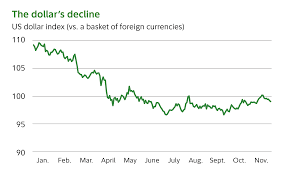
5.1 Currency Is a Second Layer of Return
International investing introduces currency exposure, meaning returns depend on:
- Asset performance
- Exchange rate movements
This is often misunderstood as pure risk.
5.2 Strategic Currency Diversification
Holding assets in multiple currencies can:
- Hedge domestic currency depreciation
- Preserve global purchasing power
- Increase mobility and optionality
CEO framing:
Currency risk is dangerous only when it is accidental.
6. Valuations Differ by Geography
Markets do not price assets uniformly.
At different times, international markets may offer:
- Lower price-to-earnings ratios
- Higher dividend yields
- Better growth-adjusted valuations
Global investors can rotate capital toward underappreciated regions.
This is value investing without borders.
7. Risk Factors in International Investing
International investing has real risks:
- Political instability
- Regulatory changes
- Corporate governance issues
- Capital controls
These risks are not reasons to avoid global investing.
They are reasons to:
- Size positions appropriately
- Diversify across regions
- Favor transparency and liquidity
CEO rule:
Risk is not eliminated by avoidance. It is managed by design.
8. Practical Ways to Invest Internationally
8.1 Public Market Access
The simplest entry points include:
- Global and international ETFs
- Regional or country-specific funds
- ADRs and dual-listed equities
These provide:
- Liquidity
- Transparency
- Scalability
8.2 Private Market Exposure
For sophisticated investors:
- International private equity
- Venture capital funds
- Cross-border partnerships
Higher potential returns come with:
- Lower liquidity
- Higher complexity
- Longer time horizons
8.3 Operating Businesses as Investments
For founders and CEOs, owning or expanding operating businesses internationally combines:
- Strategic growth
- Capital appreciation
- Control
This is the most complex—but potentially most powerful—form of international investing.
9. Tax and Regulatory Reality
International investing introduces complexity:
- Withholding taxes
- Double-taxation treaties
- Reporting requirements
However, complexity does not mean inefficiency.
With proper structuring and advice, global portfolios can be both compliant and tax-efficient.
10. Behavioral Advantages of Global Investing
International investors tend to:
- Think longer term
- React less to local noise
- Develop structural rather than emotional views
This behavioral edge is often underestimated.
11. A CEO Framework for Global Allocation
Before investing internationally, ask:
- How concentrated is my current exposure?
- Which regions benefit from long-term trends?
- How does currency affect my total risk?
- Am I diversified by intention or by accident?
Capital allocation should be explicit, not default.
12. Common Mistakes to Avoid
❌ Chasing geopolitical headlines
❌ Overallocating to one foreign market
❌ Ignoring currency impact
❌ Confusing volatility with risk
Global investing rewards discipline, not impulse.
Conclusion: Why International Investing Makes Sense
International investing is not about complexity for its own sake. It is about aligning capital with reality.
For CEOs and serious investors, global investing:
- Reduces concentration risk
- Expands opportunity sets
- Strengthens long-term resilience
In a world where business is global, capital strategy must be global as well.
International investing makes sense—not because it is trendy, but because it is rational, disciplined, and forward-looking.
Word Count:
370
Summary:
Of the world’s 40,000 publicly traded companies, 77 percent are located abroad, a pretty good sign that there are compelling investment opportunities outside the United States. Viewed another way, 51 percent of the world’s $38 trillion total market capitalization belongs to the international arena. U.S. mutual funds hold $491 billion in overseas investments.
Keywords:
International Investing: Why it Makes Sense
Article Body:
Of the world’s 40,000 publicly traded companies, 77 percent are located abroad, a pretty good sign that there are compelling investment opportunities outside the United States. Viewed another way, 51 percent of the world’s $38 trillion total market capitalization belongs to the international arena. U.S. mutual funds hold $491 billion in overseas investments.
With so many potential investments outside the United States, investing internationally becomes a great way to diversify an equity portfolio. Some people contend that there is an increasing correlation in performance between the United States and international markets. But while world markets often tend to react similarly to news or developments occurring around the globe, over time, international and domestic markets tend to behave differently, helping to smooth out the ride in a diversified portfolio.
Consider the performance of the Morgan Stanley Capital International Europe, Australia and Far East Index, which charts the progress of stocks in developed markets located in Europe, Australia and the Far East, versus the S&P 500, considered representative of the broader U.S. stock market. When one is going strong, the other tends to lag behind, and that has been the case going back as far as 1970. In addition, when the MSCI EAFE outperforms the S&P 500, it has done so by a greater margin than when performances are reversed.
In fact, during the past 10 years, the U.S. stock market has never been the leader in the global investment arena. Top performance has been the exclusive domain of international indices during that time, and the returns of the S&P 500 sometimes have lagged those of overseas peers by wide margins.
Global funds invest about half in the United States and half in the rest of the world, making them a smart way for someone with little or no experience in international investing to test the waters. A good example is American Century Global Growth, whose managers scour the globe for the best growth investment opportunities for the fund’s shareholders.
You should consider the fund’s investment objectives, risks, and charges and expenses carefully before you invest. The fund’s prospectus, which can be obtained by calling or visiting American Century’s Web site, contains this and other information about the fund and should be read carefully before investing.


Tinggalkan Balasan